How to Set Highland Dance Goals and ACTUALLY Achieve Them
Setting and Planning Realistic Dance Goals
New year, new goals! Maybe you’re a dancer who likes to do all their goal setting in January for the year ahead. Or maybe you set goals at another point in the year (I’m a September goal setting girlie myself).
No matter when you’re goal setting, we encourage you to take these goal setting strategies and tips with you, so the whole experience can be positive and focused on YOUR personal growth!
If you’re ready to have your best year yet as a highland dancer, let’s get started.
SMART Goals for Dancers… With a Twist
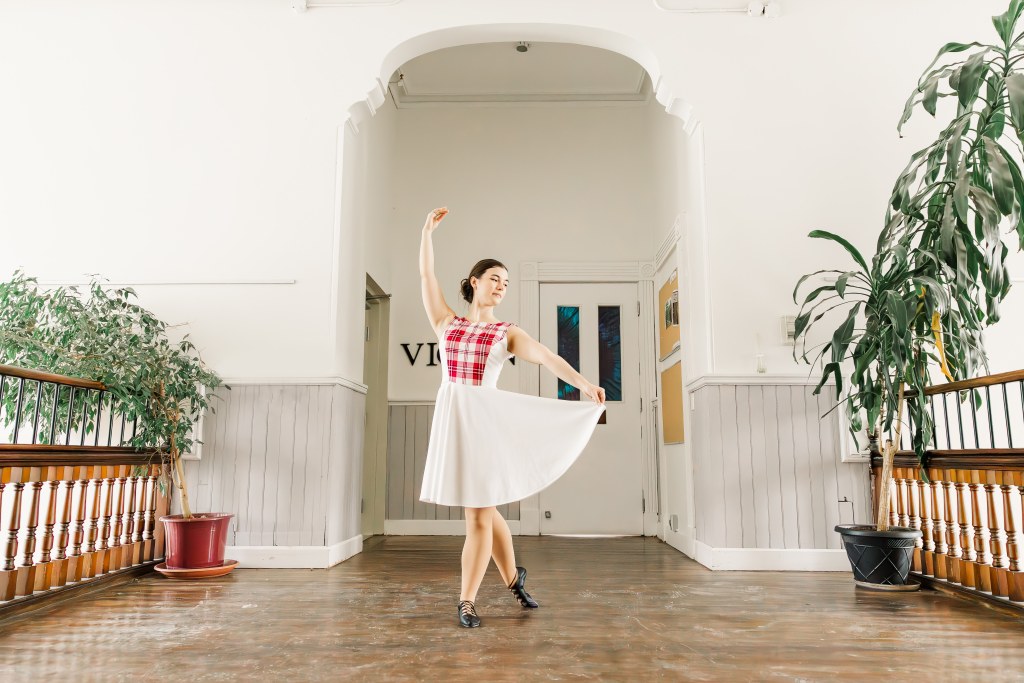
You’ve probably heard of SMART goals before: Specific, Measurable, Attainable, Realistic, and Time-bound. These principles still hold up when it comes to goal setting, but I like to take things one step further to make them more actionable and dance-specific, and encourage our studio dancers to do the same.
When setting my own dance goals, I break them into four categories:
1️⃣ Habits
2️⃣ Learning/Technique
3️⃣ Experiences
4️⃣ Results
Why do I love this approach? It gives me a well-rounded vision for my dance year. While I still set result-oriented goals (like placing at a competition), I remind myself that results are often out of my control. Those goals carry less weight for me, but they can still spark motivation. Most of my energy goes toward habits, learning, and experiences—the things that I can control.

Examples of Dance Goals by Category
Need help figuring out where to start? Here’s how I break my own goals down:
💡 Habits
- At-home practice 4 days a week
- Incorporate 2 hours of strength training per week
💡 Learning/Technique
- Improve turnout in split highcuts
- Learn the Sailor’s Hornpipe
💡 Experiences
- Choreograph and perform my own solo
- Travel to a competition with a dance friend
💡 Results
- Win a championship
- Get accepted into a Military Tattoo

Build a Plan for Your Goals
Step 1: Lay Out Your Year
Start by looking ahead and laying out your entire dance year. Write down key dates like competitions, performances, application deadlines, and events. Then, map out where your goals fit in.
For example, if you have a big competition in April and you want to improve your highcuts by then, work backward to determine how much time you’ll need to focus on this goal during your practices.
Step 2: Break Your Goals Down Into Steps
Big goals can feel overwhelming, so breaking them into small, actionable steps is key. Here’s an example:
Goal: Improve turnout in split highcuts
- Take a starting video to analyze my current turnout and form.
- Show my teacher the video and ask for specific drills to improve turnout.
- Research turnout exercises.
- Create a practice plan:
- 10 minutes of turnout exercises
- 10 minutes of highcut drills
- 50 reps of half-time highcuts
- 16 highcuts up to speed
- Highcuts within a step
- Take a progress video halfway through my timeline and a final video at the end to compare results.
By breaking down your goal into steps, you’ll know exactly what to do during your practice time—and you’ll stay motivated by seeing your progress along the way.
Step 3: Build Muscle Memory
Did you know it takes 21 days of 50–400 reps to build muscle memory? 🤯 Use this knowledge to structure your practices around specific dates you want to achieve things by! Repetition is key, so plan your sessions around consistent drills and exercises. Over time, these movements will feel natural, even under the pressure of competition.
You won’t even need to think about your corrections when you’re on the stage! They’ll come naturally if you put enough time in.
Step 4: Keep Track of Your Progress
One of my favorite tips from a sports psychology session that we hosted last year was keeping a “competition journal.” After every event, reflect on:
- How you felt that day
- What went well
- What could be improved (pros versus grows)
The goal-setting process doesn’t stop once you’ve written your goals down. By regularly evaluating your performances, you’ll hold yourself accountable and stay focused on improvement throughout the year.
A fun fact I learned in this session was that professional athletes are REQUIRED to maintain a log like this. If the pros are doing this… why aren’t we?!
Let’s bring this habit into the new year.
Setting Dance Goals: Next Steps
Here’s how to start:
1️⃣ Write out your goals for 2025 and break them into the four categories.
2️⃣ Put them somewhere you’ll see them every day (your dance bag, a mirror, or even your phone lock screen).
3️⃣ Share your goals with your teacher! Having someone who can support and guide you makes a huge difference in staying accountable.
Remember, goal setting is just the beginning. With intentional planning and consistency, you’ll be amazed at what you can accomplish in the coming year. Let’s make 2025 your best dance year yet!
Good luck, dancers!