Do You Have to be Scottish to Try Highland Dance?
Some questions we’re asked a lot as highland dancers include:
- How did you get involved in highland dance – is your family Scottish?
- Are you originally from Scotland?
- Do I need to be Scottish in order to try highland dance?
The short answer to all of these questions: NO!
The long answer? Well, let’s get into it…

What is Scottish Highland Dance?
Some would call highland an art form, some would call it a sport, and some would say it’s a historical cultural practice.
We would say it’s all of the above.
Highland dance is thought to have arisen in the 11th or 12th century in Scotland. In the centuries since, it has spread throughout the world to countries including Canada, Australia, New Zealand, the United States, South Africa, and many more. What started as a humble military celebration has turned into a highly competitive, athletic, and beautiful form of dance.
The Origins of Highland Dance
Highland dance has always been valued as a highly athletic style of dance, and that began in the Scottish military in the 11th or 12th century.
Highland was said to be used by clan chiefs and kings to test and select the strongest soldiers, develop discipline in their troops, and showcase endurance and agility.
In 1746, the British monarchy, in an attempt to force the often rebellious clan system into compliance, passed an Act of Parliament which banned the Scots from wearing kilts and carrying weapons. This was a major blow to Scottish culture and highland dance.
When Queen Victoria took particular interest in the beauty of Scotland during the mid-19th century, she triggered a resurgence in traditional Scottish culture in the UK. This included the beginnings of the first Highland Games, and the first Highland dance competitions.
History of Women in Highland Dance
Like so many other arts and sports, women have historically been prohibited from participating in highland dance.
That was, up until the early 20th century when 10-year-old Jenny Douglas entered a dance competition dressed as a man, and competed even when she was specifically forbidden.
Jenny Douglas created enough of a stir that more and more women began competing, particularly during the World Wars. Today, upwards of 95% of Highland dancers are women and girls!
The History of the Highland Fling
Each dance carries a piece of Scottish folklore, and tells a story of the past. For example, one of the most well-known highland dances, the Highland Fling, has a few possible histories associated with it.
One story links the Highland Fling to a deer hunt, as the arms and hands may mimic a stag as it jumps along the Scottish countryside.
An alternative origin story describes the Fling as a dance of triumph after a battle to be danced over a small shield known as a Targe.
Dances such as the Fling began as vehicles of history, and continue to carry these stories into the present, even hundreds of years after their beginning.
Modern highland dancing takes on an additional athletic element which pushes participants to develop stamina, strength, and agility to perform at their best.
What is the Difference Between Highland and Irish Dance?
One of the most common questions we’re asked is: What is the difference between Scottish highland dance and Irish dance?
Irish dance is more well-known by the general public thanks to Riverdance, so highland dancers are very used to being asked if they wear the curly wigs. But nope – highland dancers wear the buns!
Listen, we get it, Scotland and Ireland are right next to each other on the map. They share a history of being oppressed by the British monarchy and they share some funky tunes and outfits.
But that’s about where the similarities end!
Here are a few key differences:
Highland dance stylistic and costuming identifiers
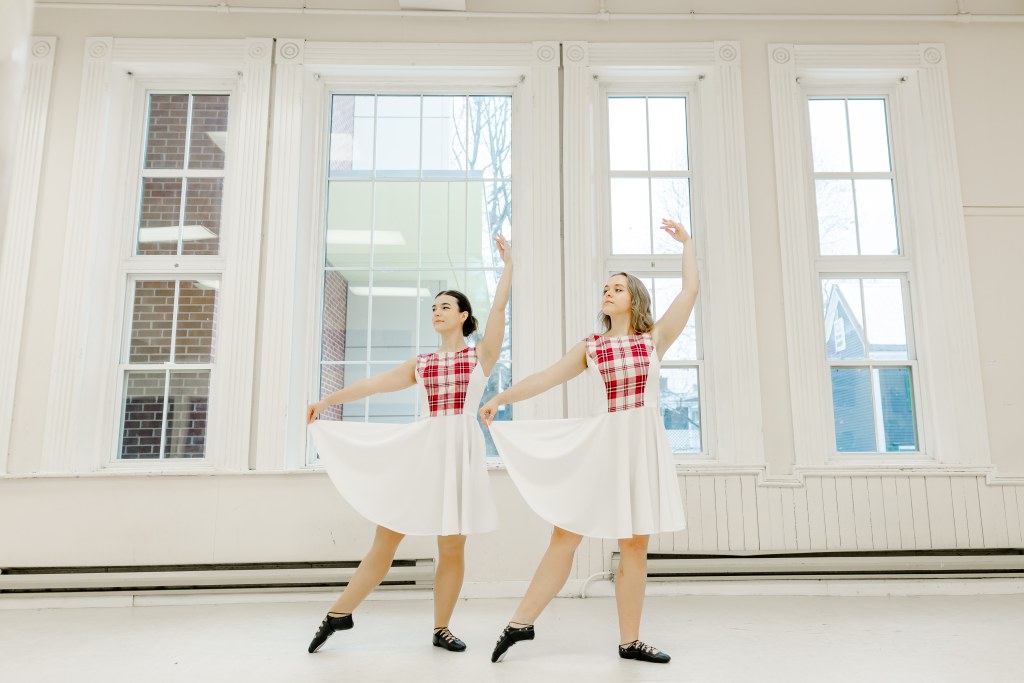
- Generally, Highland dance includes a lot of jumping, sharp movements, and extensions.
- The knees are turned out consistently, positions and movements are reminiscent of ballet.
- Highland dancers use their arms – generally placed on the waist or above the head
- For costuming, Highland dancers:
- wear soft, black, leather ghillies in most dances.
- Dancers with long hair wear their hair in a slicked back bun.
- Dance costumes are heavily regulated, with room for variation on colour and some small adornments.
- The traditional kilt outfit includes a kilt, argyle-pattern wool socks, and velvet jacket or waistcoat.
Irish dance stylistic and costuming identifiers
- Generally, Irish dance includes a lot of shuffling and tapping of the feet in quick succession. Easily recognisable are the occasional high kicks used by dancers.
- The knees are typically considered to look turned in.
- Arms are typically kept by the sides
- For costuming:
- It is common for Irish dance schools to have their own particular colours and designs to be worn on costumes
- For solo dances, dancers often choose colours, patterns, and adornments that suit themselves and the dance with the goal of standing out from competitors
- It is common for competitive female Irish dancers to wear wigs styled in ringlets that bounce.
- Dresses worn by female Irish dancers typically reach almost to the knee, cover over the collarbone and down to the wrists, and are covered in intricate Celtic knot imagery, and eye-catching sparkles, vibrant colours, and other adornments.
- Male dancers typically wear trousers, a shirt, and a coloured sash.
- There are soft shoe Irish dances and hard shoe Irish dances – the shoe worn depends on the dance and the skill level of the dancer.
Read our full article: What is the difference between Highland and Irish dance? >

Do you need to have Scottish Ancestry to try Highland Dance?
We’re asked all the time if children should have Scottish ancestry to get involved with highland dance.
Let’s put it this way: do you need to have Italian grandparents to learn how to make homemade pizzas? Do you need to be French to join ballet? No, silly!
Highland dance welcomes anyone and everyone who is interested in the physical challenge, mental stimulation, and creative engagement it offers. While the cultural and historical roots of highland run deep, modern highland is all about athleticism, inclusion, and FUN.
Highland dance is for all ages, skill levels, genders, and backgrounds
Regardless who you are and where your family comes from, you can find a home in highland dance.
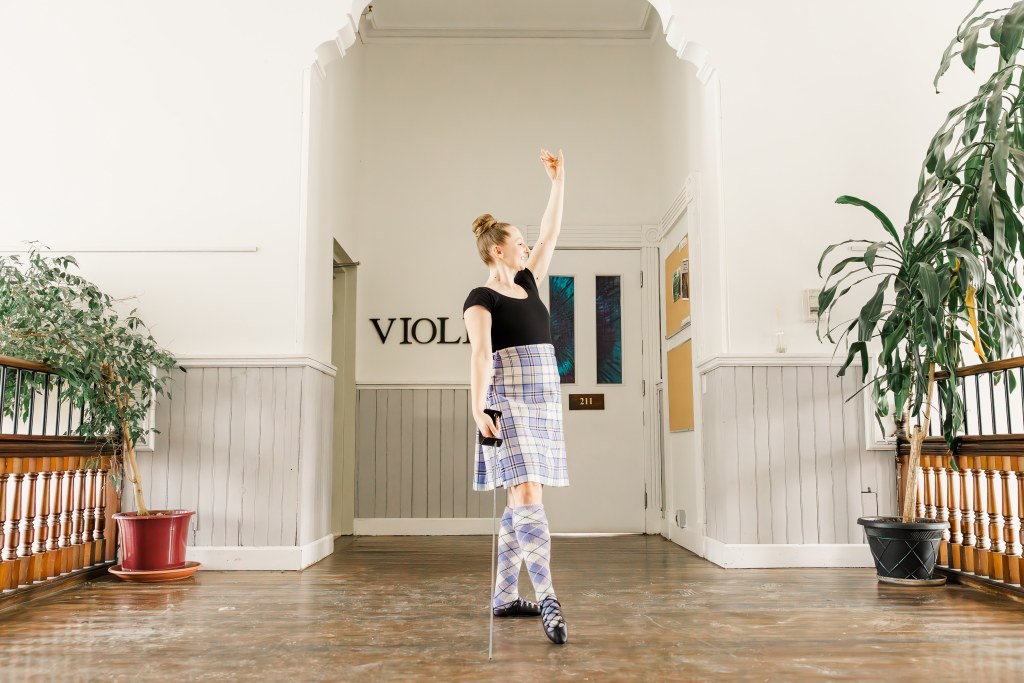
Highland dance in Fredericton, New Brunswick
Preschool dance, youth dance, adult dance in Fredericton
Looking for the best extra-curricular activity Fredericton has to offer? Look no further.
Saorsa Studio offers highland dance classes for all ages, skill levels, and goals in Fredericton, New Brunswick. Find out what highland can do for you or your child!