What is "Worlds" in Highland Dance?
And how does it work?
Most sports have an equivalent to the World Highland Dancing Championship – whether it be annual or every once in a while like the Olympics. Highland dance hasn’t made it into the Olympics (yet!) but this is as close as it gets.
This is the third and final part in our series of how the largest elite competitions in Scottish highland dancing work. In this post, we’ll be discussing the be-all-end-all of global Highland Dance: the World Championships.
How Does Competitive Highland Dance Work?
Read part one and two of this series where we dove into the Closed Provincial Championships AND the Closed Canadian Championships which happen in the lead up to Worlds.
Where are the World Championships?
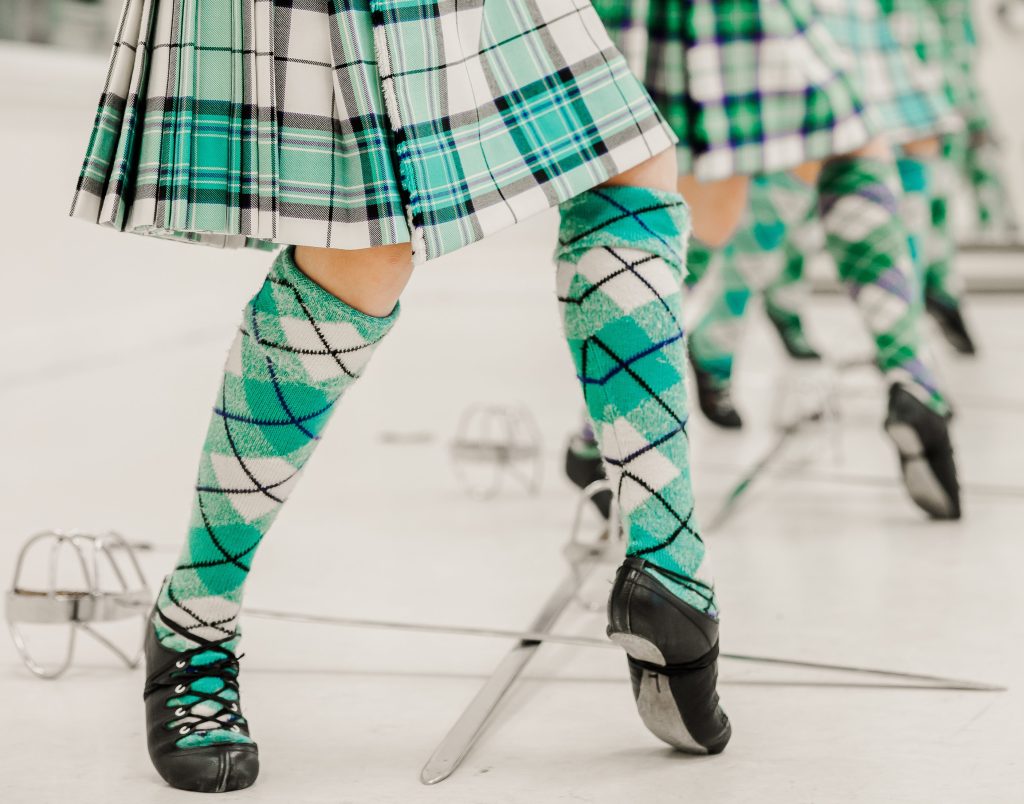
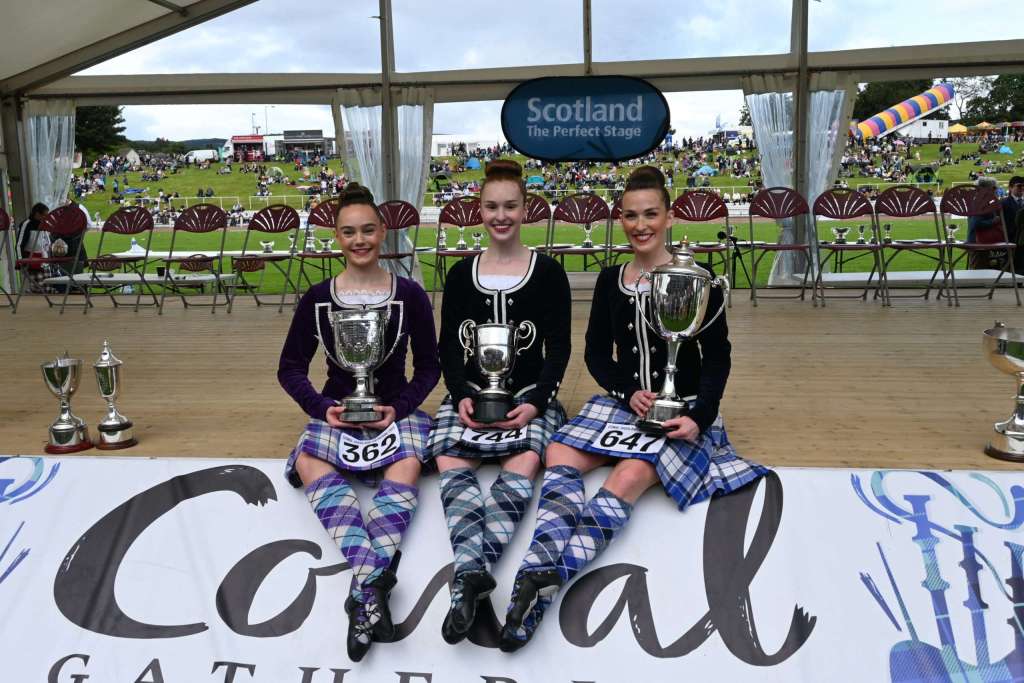
The World Highland Dance Championships are held each year at Cowal Highland Gathering in Dunoon, Scotland.
Cowal has hosted the Juvenile highland dance World Championships since 1932. The Adult category was added in 1948, and the Junior category was added in 1961 (we’ll be going over what these categories mean below!)
On the Thursday of the Cowal Highland Gathering, the qualifying rounds for the World Championship takes place. Then on Friday, it is the Scottish National Championship. The finals for Worlds are held on the Saturday.
Not only is Cowal a high-stakes highland games for dancers, it is also hosts prestigious competitions for pipe bands, individual pipers, heavy athletics, and more.
Who Dances at Worlds?
The World Championship is separated into a qualifying and a final round. For the qualifying round, any dancer can enter! The dancer must be in good standing with the Royal Scottish Official Board of Highland Dance (RSOBHD) by being registered with their national governing body (i.e.: Canadian dancers must be registered with ScotDance Canada, etc.)
How Does the World Championship Work?
On the Thursday of the Cowal Highland Gathering, dancers aged 8 to 15 compete in the Scottish Championships. Dancers compete the four championship dances. It’s a little strange, but this competition is a Worlds qualifier for some dancers. Dancers ages 8 to 11 compete and may be named “Champion” for the Scottish Championships in their respective groups, but they cannot qualify for Worlds. Only dancers aged 12 and above may qualify for Worlds. The top 4 dancers each in the Scottish Championships from ages 12 and 13, and the top 6 dancers each from age 14 and 15 move on to the World final.
Note the difference between the Scottish National Championships (held on Thursday) and the Scottish Championships (held on Friday). The Scottish National Championships are the World qualifying competition for ages 12-15, and the Scottish Championship is separate from the World Championship.
Dancers aged 16 and 17 dance in the Junior category, and dancers aged 18 and over dance in the Adult category. On the Thursday, dancers aged 16+ compete in either the Junior or Adult qualifying rounds.
As many dancers from around the world try their hand at competing on the World’s stage, dancers in the Junior and Adult categories are separated into two heats. 20 dancers may qualify in each of the Junior and Adult categories.
In total, 60 dancers compete in the final round of the World Championship – 20 in Juvenile (ages 12-15), 20 in Junior (ages 16-17), and 20 in Adult (ages 18+).

The Day of the World Highland Dance Championship
There is a Pre-Premier and the Argyllshire Championships on the morning of the finals for Worlds. In the afternoon, the 60 qualifying dancers compete for the title of World Champion. Getting a spectator seat in the grandstand can be a hot ticket – so many people – highland dancers and enthusiasts alike want to see the best of the best going head to head!
As it is such a prestigious event, there are judges and officials present from all of the major countries in highland dance – the UK, Canada, the USA, Australia, etc.
After the presentation of the awards in each group and the overall trophies, the top 6 in each group are paraded around the grandstand in celebration of their accomplishment.
Current World Champions
The current reigning (2023) World Champions are Eilidh Gammons (Juvenile champion from Helensburgh, Scotland), Olivia Burke (Junior champion from Nova Scotia, Canada) and Rebecca Thow (Adult champion from Belhelvie, Scotland).
The current most decorated World Champion is Colleen Rintamaki from Pickering, Ontario who has 10 World titles (2 Juvenile, 2 Junior, and 6 Adult wins). The most decorated Adult World Champion is Marielle Lespérance (originally from Ontario but currently residing in Dartmouth, Nova Scotia), who has 8 Adult wins and one Junior win.
Nicole's Experience Dancing at the World Championship
Saorsa Studio owner, Nicole Odo, has attended and danced in the World Championship many times, so we caught up with her on what Worlds is like from a dancers’ perspective:

“I travelled back to Scotland every summer for the remainder of high school, and all throughout university. I stayed with the same people who graciously opened their home for me ever summer, and have become like family now. I always remember summers spent in Scotland, and at the Cowal Highland Gathering, with a lot of nostalgia and great memories.
“Although the weather is typically rainy, it’s almost impossible to get a ticket for grandstand seating, and securing a spot to warm up is the struggle of the century… There’s something so inspiring about watching the best dancers in the world, witnessing all the emotions and pride as people achieve their biggest goals, and simply enjoying the atmosphere.

Looking to learn more about the world of competitive highland dance?
Source: Cowal Gathering