What You Need to Know About Highland Dance Choreography Costumes

What you need to know about highland dance choreography costumes​

Guide to highland choreography outfit rules

The costumes used in today’s highland dance competitions are based on traditional Scottish garb – including velvet jackets and waistcoats, wool argyle socks, and of course: kilts!

These traditional outfits suit this traditional style of dance. But there’s one instance where the usual rules go out the window and dancers are given considerable freedom to choose what they wear: choreography competitions! 

Saorsa Studio Highland Dance Fredericton New Brunswick
Kilt outfit for modern competitive highland dance

What is a choreography competition in highland dance?

A choreography competition is a type of competition which lies a bit outside of the traditional highland competitive scene.

According to the Royal Scottish Official Board of Highland Dance (RSOBHD), choreography is: 

  • For Pre-Premier and Premier dancers, but Pre-Premiers may not have their cards stamped from a choreography event
  • Competed as either a solo (1 dancer), a duet (2 dancers), or a group (3 dancers up to a maximum number that may be set by the event organiser)
  • Content must be made up primarily of movements from Highland, National, Hornpipe and/or Jig
  • Themed or Open, as defined by the event organiser (more on this below)
  • Should have a time limit as defined by the event organiser, including dancer stage entrances and exits
  • May make use of static or non-static props, but cannot include use live animals (we would love to know the story which necessitated the inclusion of this rule)
  • A team should consist of dancers from the same studio, or any dance which includes dancers from different studios should see the teacher/choreographer abide by the three month teaching/judging rule.

 Read more about what the RSOBHD does for highland dance here >

At Saorsa, we LOVE choreography. Watch a few of ours below! 

Highland dance costuming guide

Looking for a guide to the traditional highland costumes? The Kilt, Aboyne/National Costume, Hornpipe, and Jig costumes each come with their own set of rules and regulations. Read our complete guide here! > 

Saorsa Studio Highland Dance Fredericton New Brunswick

Highland dance choreography costumes

There isn’t much out there for official rules surrounding choreography costumes. When it comes to the Kilt outfit, there are lots of little rules surrounding what is and is not accepted. When it comes to choreographies, things are significantly less defined.

Let’s break down the rules that do exist.

A group of dancers in purple smile in a line
These purple dresses were purchased from Amazon and outfitted with Celtic knots and tartan by studio members.

Official RSOBHD rules surrounding choreography outfits

As with all other aspects of competitive highland dance, these rules have been defined by the RSOBHD.

In the January 2025 edition of the RSOBHD Rule Book, in the choreography section, the rules state:

  • “Costumes must follow the theme and content of the item.”

Okay… what does that mean?

If we need to look at theme and content, here’s what the rules say about those: 

  • “Choreography may be classified as either:
    a) Themed – defined as the main idea on which the dance is based and may be set by the organiser
    b) Choreographed Broad Swords or Reel
    c) Set-piece – Choreographed dance to a piece of music set by the organiser
    d) Open – this may include a) Themed or b) Choreographed Broad Sword or Reel or a dance which is an interpretation of the music with no theme.”
  • “Music may be live or pre-recorded and may include vocal or percussion selections, but in all cases must be predominantly Scottish or Celtic in style. Music may be provided by the competition organiser.”
So basically, the most specific information we have to go off of is that a dance theme should always be predominantly Scottish or Celtic in style, and your costume must align with that theme and content. 
 
Not specific enough for you? 
 
Us either, really.
 
One (unofficial) rule we try to abide by at Saorsa is to always include some amount of clearly visible tartan or Celtic knot(s) in the costume. 
 
Our basic advice: don’t allow the judge(s) any room for questioning if your dance Scottish/Celtic “enough“. You want them focused on the dancing – not wondering whether they need to take off points for what you’re wearing. 
A group of 9 dancers smiles in a group next to several trophies
The white and black dresses were purchased from Amazon and outfitted with tartan by Sarah Warman. The mini kilts are from SportKilt.

Where can you buy highland dance choreography costumes?

Since the rules leave a lot up to the dancer’s choice, there are LOTS of options for finding a costume. 

Note that the suggestions below are primarily relevant for Canadian dancers, and options in your country might differ!

USED COSTUMES: 

NEW/CUSTOM COSTUMES:

NON-HIGHLAND SUPPLIERS

If you’re open to a bit of DIY, adding Scottish/Celtic flair to a non-highland costume can open up a lot of doors. Some of our favourite sites to find costumes: 

Some of these sites only accept orders from studio owners/dance instructors. Contact your studio to see if they accept facilitating these orders! 
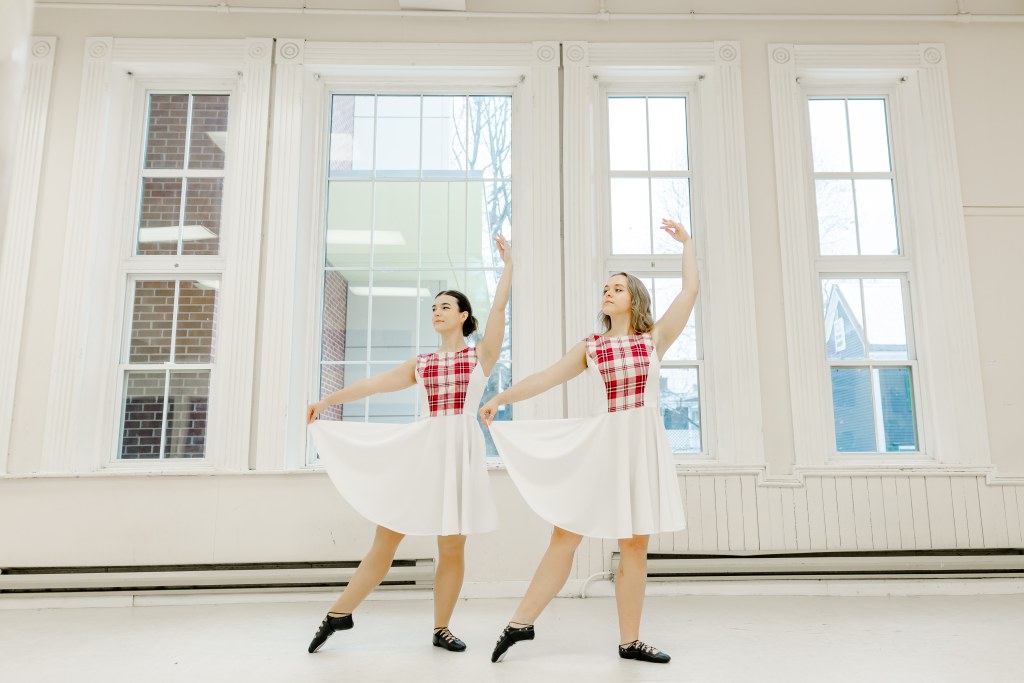
Two dancers in white and pink dresses pose in front of large windows
These dresses were custom made by Sarah Warman (Oromocto)

Guides to competitive highland dance

Looking for more posts on the niche world of competitive highland dancing? We’ve got you covered! We’ve covered how to get a dance card and start competing, the history of the dances, how to pack for competitions, and everything in between. 

Explore more highland dance blog posts > 

Saorsa Studio Highland Dance Fredericton New Brunswick

Source: RSOBHD

Leave a Reply

Discover more from Saorsa Studio | Highland Dance Studio | Fredericton, New Brunswick

Subscribe now to keep reading and get access to the full archive.

Continue reading